
Fulton Projected and Actual Release
A projected date is an estimate calculated from the sentence and rules that apply at that time. An actual release date records a custody event after it happens. They should never be reported as the same fact. Fulton County Jail may hold a person before trial with no set release date. Bond, pretrial release, dismissal, a new order, or transfer can change the outcome before any predicted day.
For an IDOC sentence, the most important public distinction is between Parole Date and Projected Discharge Date. Parole Date marks the move from prison confinement to community supervision in the researched IDOC fields. Projected Discharge Date is the expected end of supervision. It is not the gate date.
Find a Fulton Projected Release Date
Choose the channel by sentence and custodian. A county jail booking does not become an IDOC case unless the court commits the person to state custody. Conversely, Illinois River Correctional Center is a state prison, so its release fields come from IDOC rather than a Fulton jail roster.
- Identify whether the person is pretrial, serving a county sentence, or serving an IDOC sentence. Use the Fulton County court disposition when uncertain.
- For state custody, open the IDOC search information page and proceed to the offender search.
- Search by IDOC number when known. Otherwise use name or date of birth, then compare photograph, IDOC number, sentencing county, and sentence blocks.
- Read status, Parole Date, parole district, and Projected Discharge Date as separate fields.
- For county custody, ask Fulton County Sheriff records for the custody chronology and disposition code. Use the court order for the legal basis.
- Follow any named transfer to the next custodian before calling the event community release.
The full Fulton County release search explains that chain when a person leaves one system and enters another.
Illinois Credit in Fulton Dates
Illinois sentence credit is governed by 730 ILCS 5/3-6-3. The statute provides different credit rules, exclusions, percentage limits, and program-credit rules depending on the offense, sentence, and conduct. Some covered sentences use an 85 percent framework. Others do not. A broad claim that every Illinois prisoner serves half or 85 percent would be wrong.
The calculation can begin with the imposed term, then account for credit allowed by the governing subsection and credit for qualifying time already served. IDOC applies the controlling sentence data and credits. Courts resolve the judgment and jail-credit terms. The public result is an output, not enough information to recreate every internal calculation.
The official statute page displays the legal framework used in Illinois sentence-credit decisions.
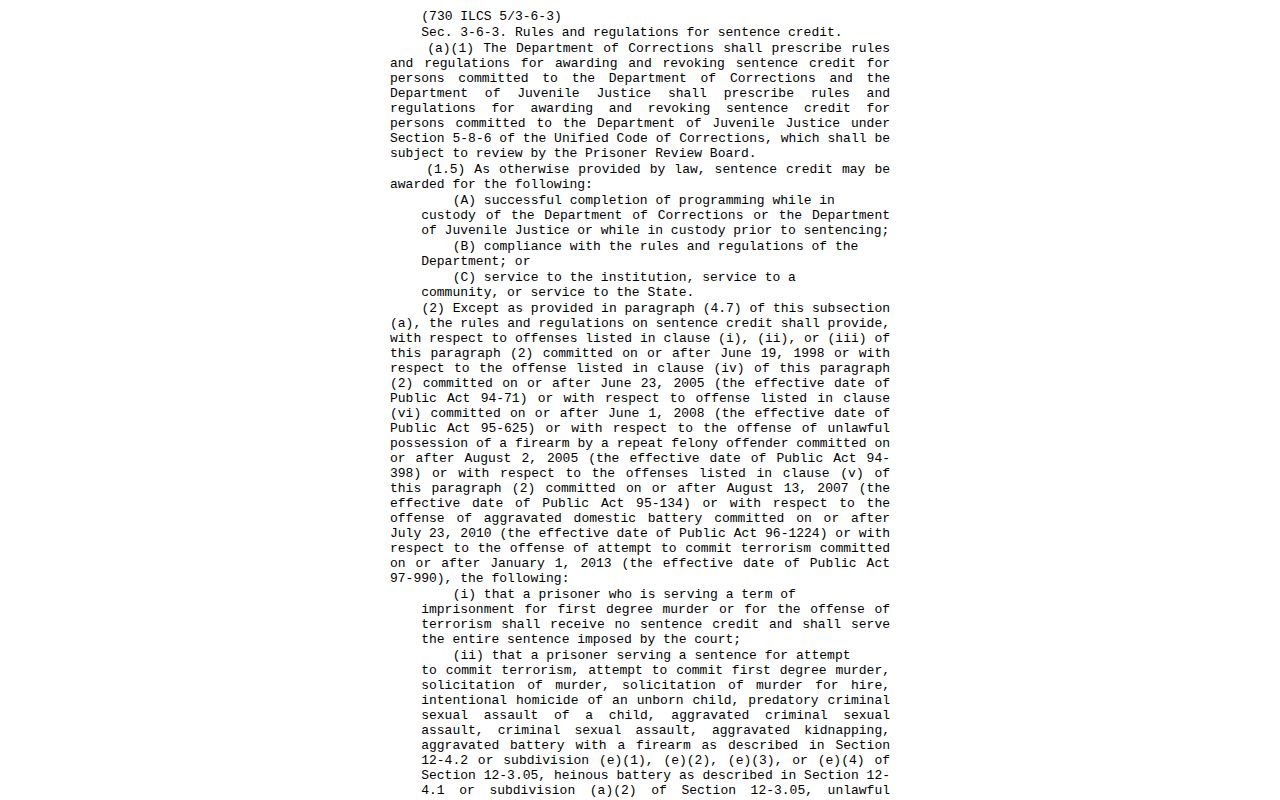
The screenshot supports the statute source. It cannot show which subsection applies to a person without the sentence, offense, dates, and exclusions.
Why Fulton Release Estimates Change
A projected date can move before or after it appears in a public system. Some changes concern the sentence calculation. Others change only where the person goes on the expected day. The safest report preserves both the old access date and the new source field rather than silently replacing one with the other.
| Factor | Possible effect |
|---|---|
| Sentence credit earned | May advance the estimate when authorized and awarded |
| Credit loss or restoration | May move the calculation under the applicable process |
| Corrected judgment or jail credit | Can change sentence inputs after court or agency review |
| New case or detainer | May prevent community release even when one custody term ends |
| Parole or MSR status | Can mark release from prison while supervision continues |
| Data update timing | Can cause a public field to lag an agency action |
An immigration detainer is a request for notice and limited continued custody so DHS can assume custody. It does not prove ICE actually took the person. A sheriff transfer record should identify the handoff, and the next custodian must then be checked.
Confirm a Fulton Release Date
IDOC’s public result may show identifying photographs, status, admission date, Parole Date, Projected Discharge Date, parole district, and sentencing blocks. Compare those fields before accepting a match. Names can collide. The search application permits last-name, IDOC-number, and date-of-birth routes, with an IDOC number giving the strongest direct key.
The IDOC offender search application shows the available search choices and public result format.
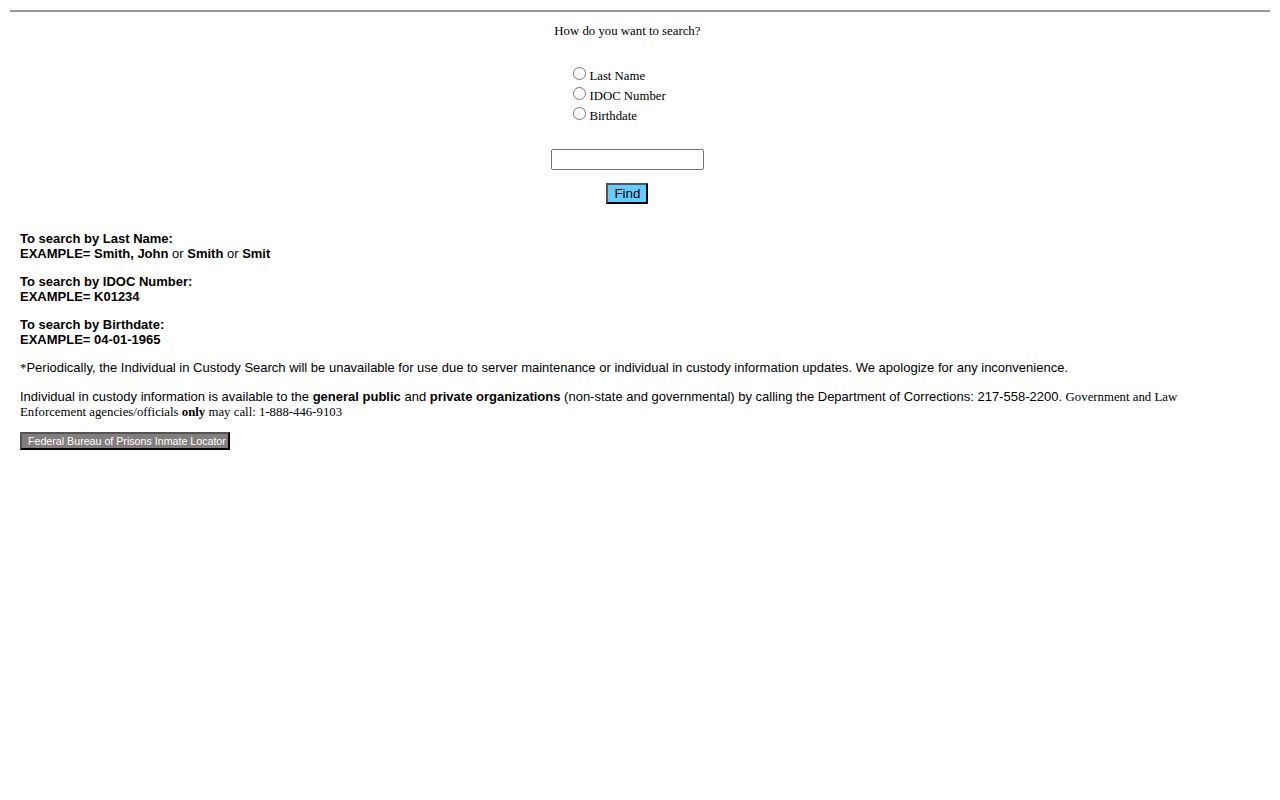
The image demonstrates the state search path. A public result must still be matched by IDOC number, image, sentencing county, and sentence facts before its date is attributed to someone.
Illinois VINE can provide a pending custody-event alert, but it is not certified proof. The Fulton County VINE check covers registration and event labels. Confirm the final event with the sheriff or IDOC.
Fulton Parole Date Is Not Discharge
A status of PAROLE supports that the person left prison confinement and remains under supervision. It does not show completion of the sentence. Projected Discharge Date points to the anticipated end of that supervised term. If the status still indicates custody, the person may remain confined or may have moved within IDOC.
IDOC warns that a person may stop appearing after completing and discharging the sentence or parole. Still, a no-result cannot establish discharge on its own. A spelling issue, identity mismatch, old data, or public-search coverage can also cause it. Preserve the court disposition or request an official record when an exact historical end date matters.
The IDOC FAQ provides official release and discharge context.
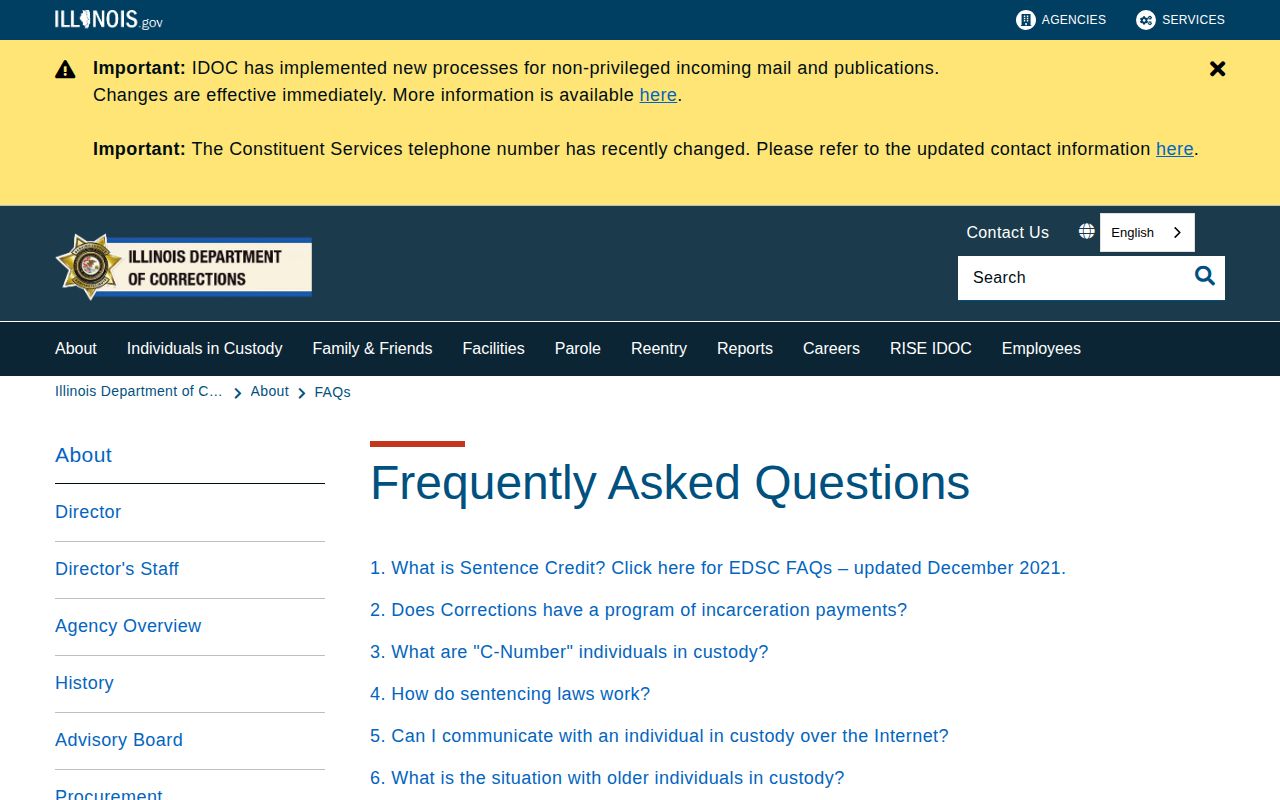
The image supports IDOC’s general explanation, while the person’s own record supplies the applicable status and dates.
Fulton Court and Jail Timing
A Fulton County court order explains why release is legally allowed. The sheriff chronology shows when the physical custody change occurred. Those times need not match. Processing, another hold, or a transfer can separate the order from departure. A court docket alone should not be rewritten as the jail release time.
For a focused sheriff request, identify one person and booking episode. Seek the chronological entry showing received, discharged, or transferred date and time, plus the release or disposition description and destination agency if maintained. Illinois FOIA section 2.15 specifically addresses chronologically maintained receipt, discharge, and transfer information for an incarcerated person.
If the sheriff entry says transfer, the Fulton release date is only a departure from sheriff custody. Follow IDOC, another jail, USMS, or ICE until an authoritative source shows community release or final discharge. Note: “Discharged from jail” can describe a transfer and should not be shortened to “free.”
Which Fulton Release Date Controls
This is Fulton County’s distinctive date problem: one person can have several valid dates at once. The sentencing date starts legal terms. A court release-order time authorizes action. A sheriff discharge time records departure from county custody. IDOC may show a Parole Date and a later Projected Discharge Date. VINE may deliver notice after the source event posts.
Label each event with its agency. “Parole Date, IDOC” is stronger than an unlabeled release date. “Discharged from Fulton County Sheriff custody” is more exact than “released.” Keep projected dates marked as projections. When two official sources disagree, retain both events and ask whether the gap reflects ordinary processing, a transfer, correction, or a true error.
Corrections go to the record owner. Sheriff records handles its custody line. The Circuit Clerk handles court material. IDOC handles its offender fields. VINE cannot rewrite any of them. This field-first method makes a Fulton County release date lookup both more useful and less likely to overstate the person’s actual status.
Record the date on which each public field was checked. Projected dates can be revised, and a screenshot without an agency label or access date loses key context. When exact historical proof is required, request the source record from the custodian rather than relying on a saved search result.
Fulton Sentence Rules Before Estimates
Do not choose a percentage before reading the sentence. Illinois credit law is divided by offense, offense date, sentence, exclusions, and the kind of credit at issue. An 85 percent rule can apply to specified sentences, while other sentences follow different provisions. Program credit may also have statutory limits. The judgment, mittimus, and IDOC sentence block provide the facts needed to identify the correct rule.
A mittimus is the court document directing custody under the sentence. Jail credit is time the court recognizes as already served before the prison calculation. Sentence credit is credit authorized under Illinois law and applied through the proper process. These terms affect the estimate in different ways. They should not be merged into a single informal “good time” number.
When a calculation seems wrong, compare the sentencing order, credited days, IDOC sentence data, and the public field. A court error belongs with the Circuit Clerk and judicial correction process. An IDOC data issue belongs with IDOC and should include the IDOC number plus the supporting order. A VINE alert cannot correct either source.
Fulton County Jail Date Path
A person held before trial usually lacks a reliable projected release date. The court may set or change pretrial terms, dismiss a charge, issue a release order, or commit the person to another custodian. Even after an order, the jail must finish its physical release or transfer process. No official source reviewed for Fulton County publishes a fixed release-processing hour, exit door, weekend rule, or public schedule.
For a county sentence, use the court judgment to understand the term and credited time, then use sheriff records for the actual custody event. The researched Fulton County pages do not provide a public recent-release archive or stated retention period. A focused FOIA request should therefore identify one booking and ask for the chronological receipt, discharge, or transfer entry, disposition description, and destination agency if maintained.
Release-day plans should account for uncertainty. Fulton County Rural Transit requires advance scheduling and does not promise a jail-release shuttle or a pickup tied to an unpredictable processing time. Family should confirm feasibility with the transit provider and jail instead of treating a projected court or sentence date as a guaranteed pickup time. Actual release may occur later, or the person may transfer rather than leave custody.